
Contents
The Antarctic continent does not resemble any place on Earth that you can imagine. So follow along with us in this article about amazing facts about Antarctica, its inhabitants, and the creatures hidden beneath its frozen crust that you have never heard of before.
Antarctica is considered the windiest, coldest, and stormiest continent for most of the year compared to all continents around the world, covering an area of 14,200,000 square kilometers (equivalent to 5,500,000 square miles).
Antarctica is also the largest ice storage in the world, and here are the main facts:
Quick Facts About Antarctica
- Its mass is 7.2 million cubic miles.
- Antarctica holds the purest water on Earth. The amazing thing is that 60 to 90% of the world’s fresh water is trapped in this continent. The ice sheet of this continent is the largest (its area is 14 million square kilometers, equivalent to 5.4 million square miles), an expanse that includes ice mountain ranges, valleys, and icy plateaus.
- It is noteworthy that the estimated ice-free areas do not exceed 1% of the total area. These areas are completely ice-free, especially in summer, and are the places that travelers, explorers, and tourism enthusiasts go to.
- It is worth mentioning that the thickness of the deepest ice sheet reaches 4.5 km, equivalent to half the height of Mount Everest! Imagine if all this ice were to melt. Scientists say that if this happens, global water levels would rise by 60 meters, which would be enough to submerge cities and countries. However, some estimates suggest that global water levels would rise by 5 meters, which is a significant amount as well.
It should be noted that the thickness of the crust varies from place to place, reaching 1 km in some areas and 1.5 km in others.
Antarctica is Just a Desert
You may find this surprising. How can a continent filled with frozen water be a desert? This is certainly due to your misunderstanding of the concept of a desert. It is not necessary for sand, dunes, and high temperatures to define a desert.
According to scientists, a desert is an area with low rainfall. This is the actual climate of Antarctica despite its frozen water and cold temperatures.
According to meteorological reports, the annual rainfall average across the entire Antarctic continent over the past 30 years has not exceeded 30 mm. Despite the relatively increased rainfall levels in the coasts, the average across the entire area is sufficient to classify it as a desert!
And because rainfall is extremely low, scientists estimate that this immense thickness of ice took about 45 million years to form.
Antarctica Was Not Always This Cold
Although the lowest temperature recorded by scientists is in Antarctica, reaching -98.2 degrees Celsius (-128.6 degrees Fahrenheit), it once had a warm and ideal climate. Scientists estimate that the temperature in the continent reached 17 degrees Celsius about 40-50 million years ago. According to fossils found in the continent, it was covered with shrubs and forests, and dinosaurs once made it their home.
Storms Like No Other in the Continent
We dislike the days invaded by storms when the wind speed reaches only 30 km/h! We cannot bear to leave the house when wind speeds reach 60 km/h. But you can imagine that storms never subside day or night all over Antarctica, with astonishing wind speeds reaching 200 miles per hour, equivalent to 320 km/h. This is enough to uproot trees if they existed.
Inhabitants of Antarctica
Speaking of the inhabitants of Antarctica, you might ask, is there anyone living and working in that cold land? In fact, there are many bases established by countries on this continent, totaling 82 bases established by 30 countries around the world.
Some of these bases operate only in summer, while others operate year-round, with a total population of 5,000 in the entire continent in summer. However, this number drops to only 1,000 in the long cold winter.
Creatures Hidden in Antarctica
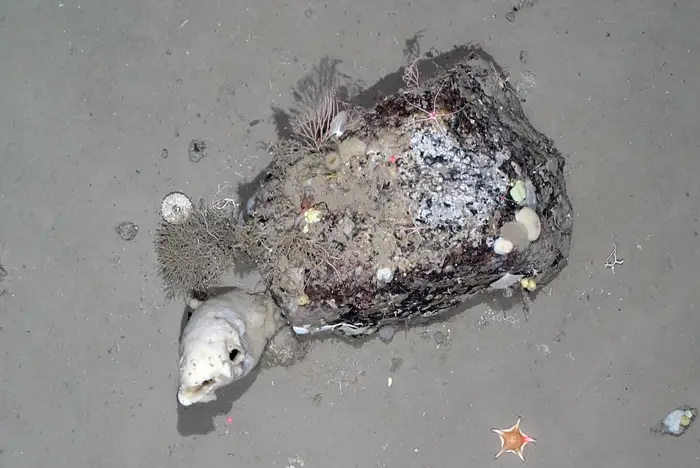
A massive ice collapse in Antarctica last year (2021) led to the discovery of many creatures that live beneath the ice. The ice sheet named A74, equal in size to Los Angeles, moved away from Antarctica, revealing an area of ocean that had not seen sunlight for 50 years.
But what are the creatures discovered beneath this icy surface?
Most of the organisms found are of the sessile animal type (i.e., animals that are attached and unable to move). More precisely, we can say they are similar to anemones that attach to rocks or on the ocean floor and do not move. Most of the organisms were largely of filter-feeding species, like sea sponges. Here are some pictures captured by scientists.
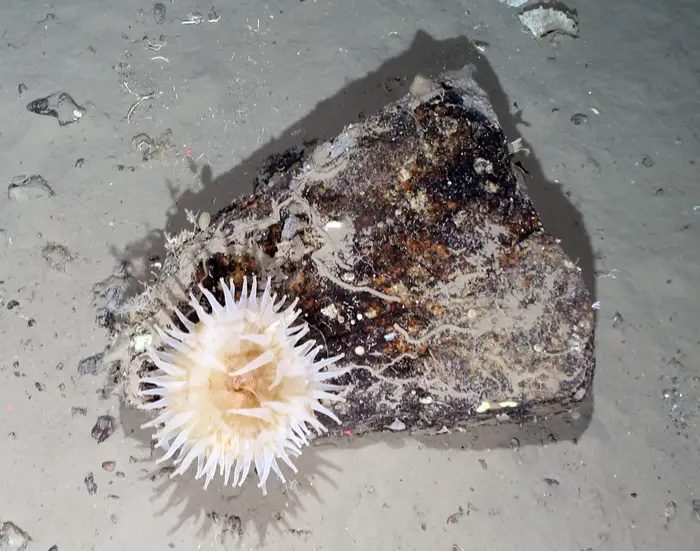
Here are more pictures:
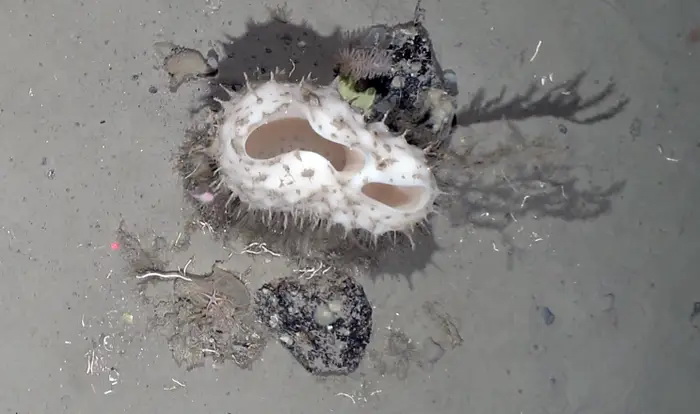
These immobile creatures feed on tiny (microscopic) plankton and other small organisms.
Shocking Facts About the Creatures of the Continent
In fact, the existence of those sponge-like organisms was not shocking to scientists. Instead, it was the presence of other creatures not expected to survive in this barren environment. The other creatures capable of movement included fish, worms, and types of octopus!
Sources:
1- 10-fun-facts-about-antarctica – aurora-expeditions.com
2- amazing-antarctica-facts – livescience.com
3- photos-creatures-under-antarctica-iceberg-2021 – businessinsider.com