

Contents
Yes, this information is historically correct, but it requires precise clarification as the material used has changed over time:
Radium Stage (Last Century)
In the early to mid-twentieth century (approximately from 1910 to the 1960s), clock hands were painted with a substance containing radium-226 (Radium-226) and not uranium.
How Did Clock Hands Glow?
Radium is a highly radioactive substance that was mixed with a chemical substance (zinc sulfide) to make it glow continuously without needing to be charged with light.
The Danger of Radium
Radium is a very dangerous substance. The case of the “Radium Girls” became famous, as they were factory workers who contracted serious illnesses due to inhaling and touching this substance. We will talk about that story at the end of the article.
Was Uranium Used?
Uranium was mainly used in coloring glass and ceramics (like the famous green Vaseline glass), but it was not the primary substance for painting glowing clock hands, as radium was much stronger in illumination.
Do Modern Clock Hands Contain Uranium or Radium?
The modern watches we wear today are completely safe. They do not use radium or uranium. Instead, safe techniques are used:
- Luminova: A phosphorescent material that charges itself from light and discharges in the dark (non-radioactive).
- Tritium: A “very weak” radioactive gas sealed inside small glass tubes. Its radiation does not penetrate glass or human skin and is considered completely safe according to international standards.
How to Know if Your Old Clock Contains Radioactive Material?
If you have an antique (vintage) clock from the 1940s or 1950s and want to verify it, you should look for two things:
- If the paint tends to be dark yellow, orange, or brown.
- If the clock glows continuously in complete darkness without being exposed to light (self-illuminating).
In this case, it is recommended not to open the clock or try to scrape the paint to avoid inhaling radioactive dust.
But what about the light switch keys that glow at night?
Do Old Light Switches Contain Radioactive Materials?

If you have old light switch keys at home that glow for long periods at night despite no light, don’t worry.
Most likely, these buttons (or light switches) rely on zinc sulfide, which is the traditional material that was used in the 1980s and earlier in household industries. Here’s the analysis of its situation based on what we mentioned:
Why Do They Glow for Long Periods and Are Affected by Light?
There are two explanations for the long-lasting glow:
- Phosphorescence: The material in these buttons works like a “photo battery.” When exposed to light (either sunlight or room bulb), it absorbs energy and stores it, then starts to release it slowly as a glow in the dark.
- Intensity of Light: This explains why it is “very strong” immediately after the light is turned off; because it is at the peak of energy discharge that it just absorbed.
Do the Keys Contain Radioactive Materials (like Radium or Uranium)?
Highly likely they do not contain dangerous radioactive materials for several reasons:
- Affected by Light: Radioactive materials (like radium) glow on their own due to nuclear reactions and do not need exposure to light to charge. Since your buttons “are highly affected by light,” this is a conclusive proof that they are a safe chemical phosphorescent material and not radioactive.
- Era: By the 1980s, the use of radium in consumer products had almost stopped in most countries due to strict laws, and it was replaced with safe chemical materials.
Why Do Those Switches Glow for Very Long Periods?
In the 1980s, some companies used high-quality zinc sulfide mixed with some metallic impurities (like copper) to prolong the glow duration. And although they may seem to be glowing all night, you will find a significant difference if you compare their strength in the first 5 minutes to their strength after 4 hours, while radioactive materials remain equally strong throughout the night and day.
Conclusion
These buttons are completely safe and are not “uranium” or “radium”. They are just plastic treated with a phosphorescent material designed to help people find the light switch in total darkness.
Advice: As long as the plastic is intact and does not crumble, there is no concern about them. However, if they are very old and crumbling (turning to powder), it is better to replace them with modern switches for cleanliness and to avoid inhaling old plastic dust.
And now, as promised, we will talk about the tragic story of the Radium Girls.
The Story of the Radium Girls
The story of “Radium Girls” is one of the most brutal tragedies in industrial history, but it was the main reason for the establishment of labor protection laws that we know today. Here is the story in brief:
The “Dream” Job
In the early 20th century (around 1917), with the outbreak of World War I, the demand for glow-in-the-dark watches increased for use by soldiers. Factories (like the American Radium Company) employed hundreds of young girls to paint clock hands with the radioactive substance “radium”.
The job was considered “prestigious” and well-paid, and the girls were envious of it.
To make the numbers accurate and small on the clock, managers asked the girls to use their mouths to shape the brush tips (to sharpen the brush with their tongues).

Image rights: Chicago Daily Times / Sun-Times Media
The girls often asked how safe the material was, and the response was always: “It is completely safe”. Out of ignorance of its danger, the girls would paint their nails and teeth with radium to impress their friends in the dark, and they were called “the ghost girls” because they glowed at night while walking home.
The Health Catastrophe
A few years later, the catastrophe began:
- Girls’ teeth started to fall out unusually.
- Their jawbones began to decay and decompose (later known as “Radium Jaw”).
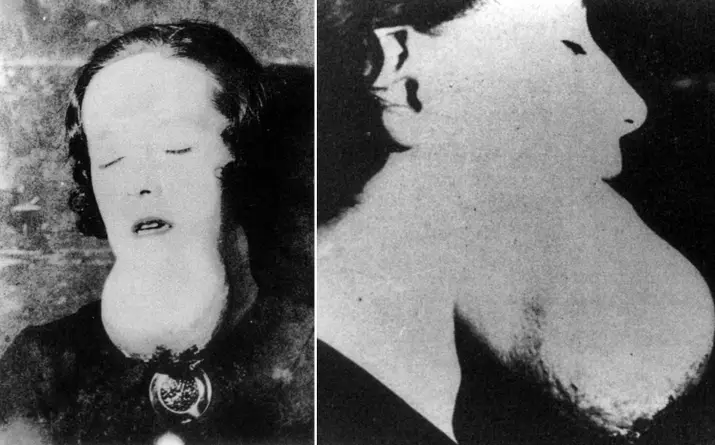
Above is a side and front view of Radium Jaw (image rights: Collection of Ross Mullner) - Many of them suffered spontaneous fractures and deadly bone cancers.
The scientific reason is that the body treats radium chemically as if it were “calcium”, absorbing and depositing it directly into the bones, allowing radiation to destroy the bones from within 24 hours a day.
The Legal Battle
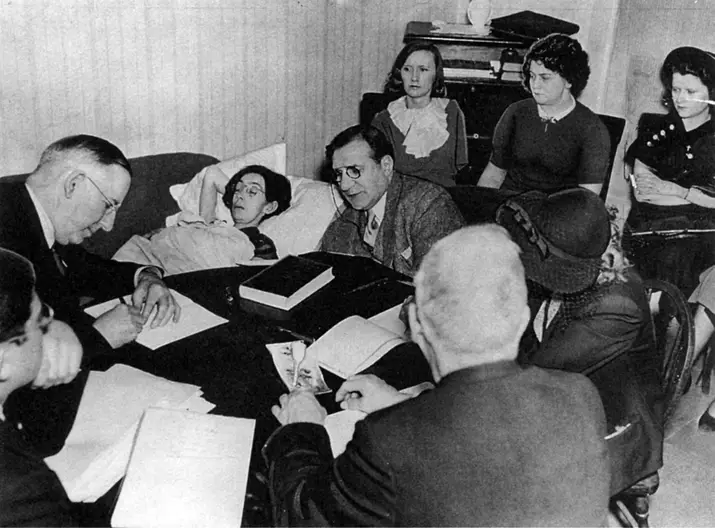
When the girls began to demand their rights, the companies denied any connection to the diseases and tried to tarnish their reputation. But five girls (led by Grace Fryer) decided to sue the companies while on their deathbeds.
Although many of them were too weak to raise their hands to take an oath in court, they won the case in 1928.
The Historical Legacy
Thanks to their sacrifice, occupational diseases became a legal responsibility for companies. The Occupational Safety and Health Administration (OSHA) was later established based on the principles of protecting workers from hazardous materials. Additionally, one of the achievements of the lawsuits they filed was the complete ban on the use of radium in clock paints and its replacement with safe materials.
Chilling Note: Because radium has a half-life of up to 1600 years, the bones of those girls in their graves still emit radiation that can be detected by “Geiger” devices to this day.
If you want to know more about this story, I recommend the film: Radium Girls (2018), starring “Joey King”, which mainly focuses on the legal and struggle aspects of the sisters who worked in the factory. The film excellently illustrates how the girls were completely unaware of what they were doing to themselves and how the symptoms started to appear on them.
If you are a book lover, I recommend the bestselling book The Radium Girls. This book is considered the most important and comprehensive reference. The author, Kate Moore, conducted exhaustive research and extracted personal letters from the girls and court records.
The book does not just present dry facts but allows you to live the daily lives of the girls, their suffering, and their heroism.
Are you still doubting the hands of your clock at home?